Research is a major priority of the Division of Rheumatology at WashU Medicine. Our laboratories are working to advance fundamental knowledge of human biology and disease, and our clinicians are conducting numerous clinical trials and epidemiological studies.
Ongoing basic and translational science efforts includes studies of complement, natural killer and other innate lymphoid cells, T-cell biology and mucosal immunology, chikungunya viral arthritis, lupus, innate and adaptive immunity, nanotherapies for rheumatoid arthritis, and human genetics. Clinical research efforts include clinical trials and epidemiological studies of rheumatoid arthritis and lupus.
Research highlights
Here are just a few examples of how we are changing what is possible through bold research:
- Investigating the immune drivers of autoimmune disease. Every day our bodies are exposed to pathogens that have the potential to trigger autoimmune disease by initiating an immune response in individuals that overwhelms body’s normal checks and balances. By understanding how these pathogens such as the Chikungunya virus or other viruses cause a form of arthritis that resembles “seronegative” rheumatoid arthritis will help us develop specialized treatments that will specifically address this entity.
- Developing new approaches to diagnose and prevent autoimmune disease. Most patients suffer from symptoms of autoimmune disease for years before getting a diagnosis. WashU Medicine researchers are leading the charge to change this by developing a new blood test to detect the cells that cause autoimmunity. While this new platform is undergoing clinical development for a set of diseases caused by the gene HLA-B27, the potential application will be for any disease of the immune system.
- Pioneering regenerative therapies for osteoarthritis. WashU Medicine researchers are working to transform osteoarthritis treatment by developing therapies that do more than manage pain — they aim to repair damaged joints. Their work uses advanced nanoparticles to deliver genetic instructions directly to joint cells, enabling them to reduce inflammation, regenerate cartilage, and potentially halt or even reverse disease progression with minimally invasive treatment.
For our investigators, unrestricted philanthropic support early in their career or research is often the critical factor that enables promising ideas to advance into treatments that improve patient care.
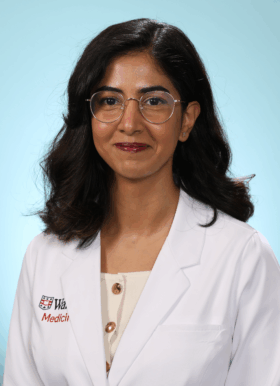
Sambhawana Bhandari, MBBS
Assistant Professor of Medicine
Medical School: Kathmandu University School of Medical Sciences, Dhulikhel, Nepal
Residency: Danbury Hospital (Nuvance Health), Danbury, Connecticut
Fellowship: Rheumatology, Washington University School of Medicine, St. Louis, Missouri (2023-2025)
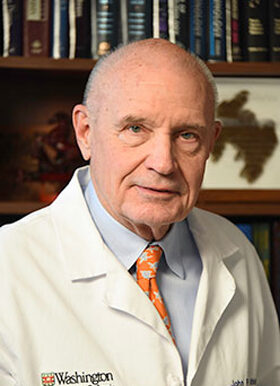
John P Atkinson, MD
Samuel B. Grant Professor Emeritus of Medicine
Research Interests: Complement and RVCL Research
Medical School: Kansas University, Lawrence, Kansas (1969)
Residency: Massachusetts General Hospital, Boston, Massachusetts (1969-1971)
Fellowship: National Institutes of Health (1973-1974), NIH postdoctoral research fellowship, Washington University School of Medicine, St. Louis, Missouri (1974-1976)
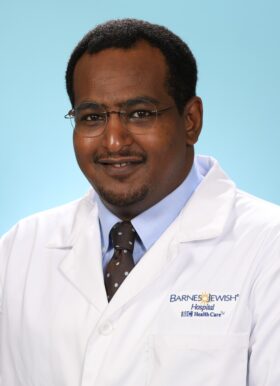
Mohamed Babiker-Mohamed, MBBS
Assistant Professor of Medicine
Medical School: University of Khartoum Faculty of Medicine, Khartoum, Sudan
Residency: AMITA Health Saint Joseph Hospital, Chicago, Illinois
Fellowship: Rheumatology, Washington University School of Medicine, St. Louis, Missouri (2022-2024)
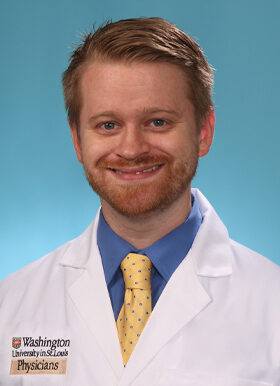
Colin Diffie, MD
Associate Professor of Medicine
Research interests: Vasculitis
Clinical interests: Vasculitis, rare diseases, arthritis
Medical School: Medical School at UT Houston, Houston, Texas (2014)
Residency: BJH/Washington University School of Medicine in St. Louis, St. Louis, Missouri (2017)
Fellowship: Rheumatology, Washington University School of Medicine in St. Louis, St. Louis, Missouri (2017-2019)
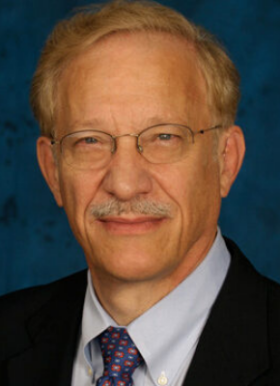
Seth Eisen, MD, MSc
Professor Of Medicine
Research Interests:
Clinical Interests:
Medical School: Washington University School of Medicine, St. Louis, Missouri (1962-1966)
Residency: Resident, Washington University School of Medicine and Barnes Hospital, St. Louis, Missouri (1972-1974)
Fellowship: USPHS Fellow in Allergy and Immunology, Washington University School of Medicine, St. Louis, Missouri (1969-1972)
Graduate School: Harvard School of Public Health, Boston, Massachusetts, Masters in Epidemiology, (1988-1989)
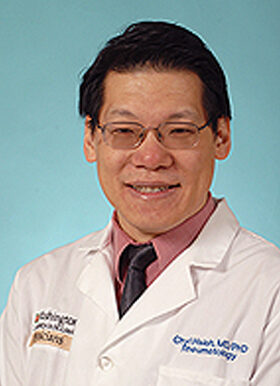
Chyi Hsieh, MD, PhD
Alan A and Edith L Wolff Distinguished Professor of Medicine
Research Interests: Autoimmunity, regulatory T cells, tolerance, and mucosal immunology
Medical School: Washington University School of Medicine, St. Louis, Missouri (1996)
Residency: Internal Medicine, University of Washington, Seattle, Washington (1996-1999)
Fellowship: Rheumatology, University of Washington, Seattle, Washington (1999-2001)
Postdoctoral Fellowship: Immunology, University of Washington, Seattle, Washington (2001-2005)